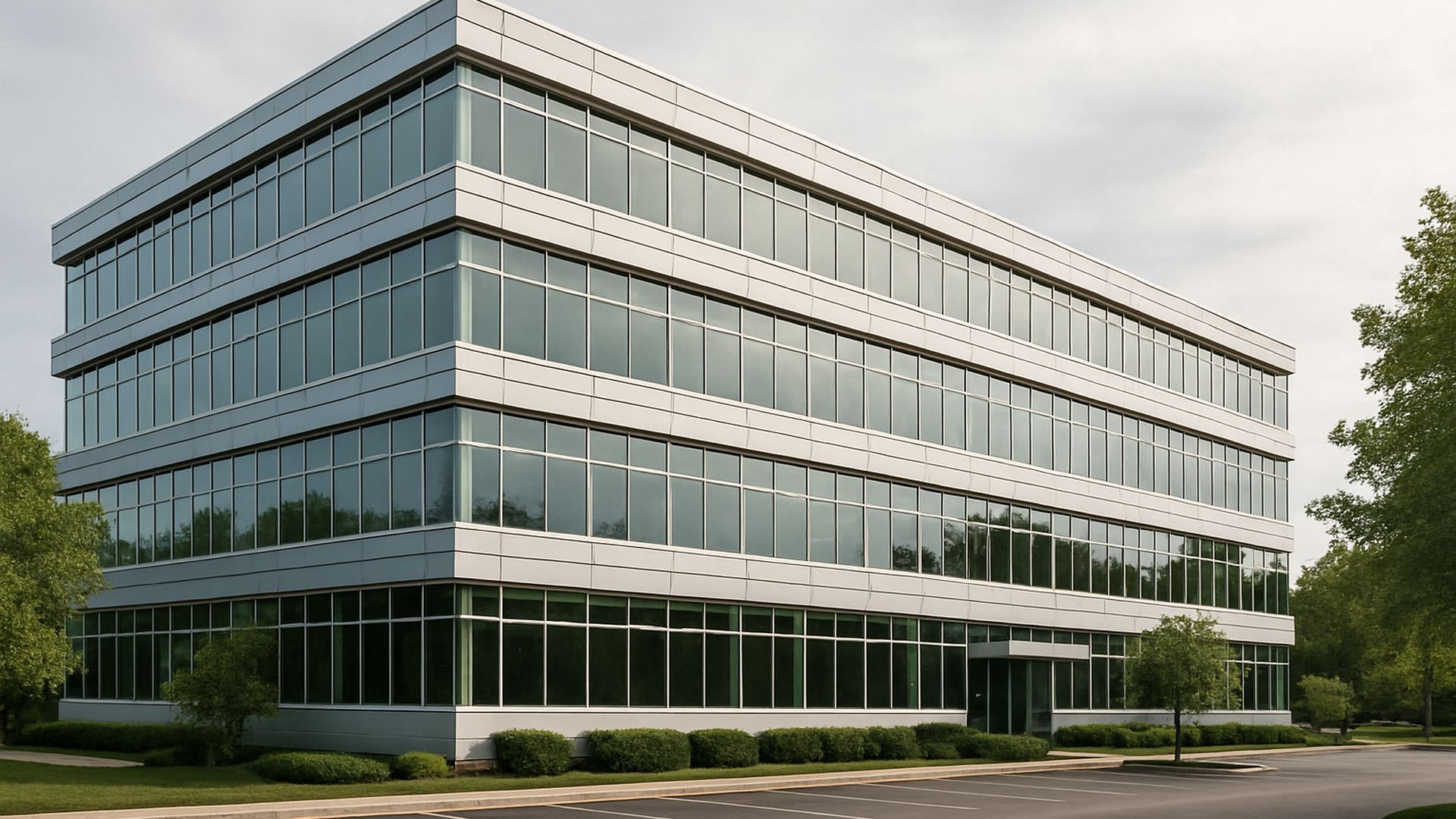
Cost Segregation for Office Properties
Office buildings sit in the middle of the commercial reclass spectrum. They produce less accelerated depreciation than restaurants or medical office (the FF&E-heavy property types) but materially more than warehouse industrial. The driver is tenant-finish density: carpet, decorative partitions, dedicated HVAC zones, specialty lighting, and signage all classify as Section 1245 personal property or Section 1250 land improvements rather than 39-year structural.
Reclass benchmark for office
Across the Cost Seg Smart engineered analysis dataset, office properties reclassify a median of 26.3% of the depreciable basis into accelerated buckets (5-year, 7-year, and 15-year). The interquartile range across 47 office analyses is 24–30%.
| Bucket | Median % of basis |
|---|---|
| 5-year (Section 1245 personal property) | 15.2% |
| 7-year (Section 1245 specialty) | 0.5% |
| 15-year (Section 1250 land improvements) | 10.1% |
| 39-year (Section 1250 structural) | 73.7% |
The 5-year bucket dominates because tenant-finish components are most of what gets reclassified. The 15-year bucket carries parking, sidewalks, and exterior site work.
What gets reclassified in an office property
The engineered methodology examines every component touched by an office build-out. Items that classify into accelerated buckets include:
5-year personal property (Section 1245):
- Carpet, vinyl plank, and other resilient flooring not affixed for permanence
- Decorative interior partitions (movable, demountable, or tenant-specific)
- Accent and decorative lighting (sconces, pendants, cove lighting)
- Dedicated tenant HVAC equipment (supplemental cooling for IT closets, server rooms)
- Cabinetry and millwork specific to tenant fit-out
- Wall coverings (vinyl, wood paneling, decorative finishes)
- Window treatments
- Specialty electrical (data cabling raceways, dedicated circuits beyond base building)
- Audio/visual and conferencing systems
7-year specialty (Section 1245):
- Office equipment that crosses into furniture territory (built-in casework, reception desks)
- Limited categories — most office FF&E sits at 5 years
15-year land improvements (Section 1250):
- Asphalt and concrete parking lots
- Sidewalks, curbs, and concrete stairs
- Site lighting (poles, fixtures)
- Landscaping (plants, shrubs, sod, irrigation)
- Exterior signage (monument signs, building-mounted signs)
- Retaining walls, fencing
- Storm drainage and outdoor utility connections
39-year structural (Section 1250):
- Structural framing, roof, foundation
- Base building HVAC (rooftop units serving the whole building, not tenant-specific)
- Structural plumbing and electrical service
- Permanent interior partitions structural to the building
- Elevators, escalators
- Fire suppression infrastructure
The split is engineering work, not a percentage applied uniformly. A 1990s Class B suburban office gets a different result than a 2014 CBD trophy tower because the component density and the relative cost of each component differ.
Engineered analyses of office properties
Three representative analyses from the Cost Seg Smart engine:
- Small scope — neighborhood professional office, Atlanta GA — 8,000 SF, $1.4M acquisition. Year-1 federal savings at 37% bracket: $112,833.
- Mid scope — Class B suburban office, Phoenix AZ — 32,000 SF, $5.5M acquisition. Year-1 federal savings: $466,045.
- Large scope — CBD office tower, Chicago IL — 220,000 SF, $48M acquisition. Year-1 federal savings: $3,737,836.
All three figures assume 100% bonus depreciation per the One Big Beautiful Bill Act (OBBBA, 2025), top-bracket federal taxpayer, and accelerated buckets taken fully in year 1.
Audit considerations for office
The IRS Cost Segregation Audit Techniques Guide identifies office-specific examination focus areas:
-
Tenant-specific vs base building: Components that serve a specific tenant qualify as 5-year personal property; the same component installed as base building infrastructure does not. The engineering documentation must establish which side of that line each component sits on.
-
HVAC zoning: A dedicated HVAC unit serving a single tenant suite is 5-year. The same equipment serving the whole building is 39-year. The audit will trace duct runs and zone diagrams.
-
Permanence test: Section 1.48-1(c) of the Treasury Regulations sets the test for what’s a “structural component.” Items that can be removed without damage to the building generally qualify as personal property.
-
Cost reasonableness: Component costs must be defensible against RSMeans 2024 or comparable published cost data. The Cost Seg Smart engine calibrates against RSMeans + BLS PPI time index, both citable.
A defensible office study documents each component’s classification, includes the engineer’s site visit or photo record, and ties costs back to the published index.
How an office study is conducted
The engineered methodology applies six steps:
- Property scoping: square footage, year built, era profile, geographic cost factor
- Land valuation: county assessor record where reliable; statistical fallback to metro/state ratios where not
- Component inventory: identify every reclassifiable element using floor plans, photos, and (where available) construction drawings
- Cost allocation: apply RSMeans 2024 + PPI time index per component
- Classification: assign each component to the correct MACRS bucket (5/7/15/27.5/39) under Section 168 and supporting regs
- Reconciliation: ensure total component costs reconcile to the depreciable basis to the penny
Output is a 30+ page IRS-defensible report with the component schedule, methodology narrative, and supporting workpapers.
FAQ
How much does an engineered office cost segregation study cost?
Office studies typically range $2,500–$8,500 depending on building size and complexity. Sub-$2M basis sits at the low end; multi-tenant trophy CBD buildings sit at the upper end.
Is cost segregation worth it for a small office building?
At $1.4M basis (the small-scope analysis above), the engineered study identifies $304,955 in accelerated buckets, producing $112,833 in year-1 federal savings at a 37% bracket and 100% bonus. After a $2,500–$3,500 study fee, year-1 ROI is over 30×.
What if I bought the office building several years ago?
Section 481(a) catch-up depreciation allows you to take all previously-missed accelerated depreciation in the year the study is completed, without amending prior returns. Form 3115 is filed with the IRS.
Does cost segregation trigger an audit?
The IRS publishes the Cost Segregation Audit Techniques Guide because the strategy is well-established and accepted when properly documented. A defensible engineering-based study with component-level documentation is the strongest audit position.
What about depreciation recapture when I sell?
The 5-year and 7-year accelerated depreciation is recaptured as ordinary income at sale; the 15-year and 39-year sit under Section 1250 with a 25% maximum rate. Most owners net positive even after recapture because of the time value of money over the hold period.
How does cost segregation interact with a 1031 exchange?
Cost segregation does not preclude a 1031 exchange. The accelerated depreciation taken on the relinquished property carries into the basis calculation of the replacement property. Both strategies can work together; the order and structure matter.
Are there office property types where cost segregation doesn’t make sense?
Properties at extremely low basis (under $400K) or with very short expected hold periods (under 24 months) may not produce returns that justify the study fee. The engineered analysis is most productive at $500K basis and above with a 3+ year hold.
Can I do cost segregation on a property I’m renovating?
Yes — pre-renovation studies establish baseline classifications; post-renovation studies pick up the new accelerated components. The two coordinate so depreciation flows correctly.
Get an engineered analysis of your office property
Cost Seg Smart’s engineered office analyses are produced by the same methodology Big-4 firms apply, at price points built for owners of single buildings up through institutional portfolios. Schedule a 15-minute scoping call to discuss your specific property.