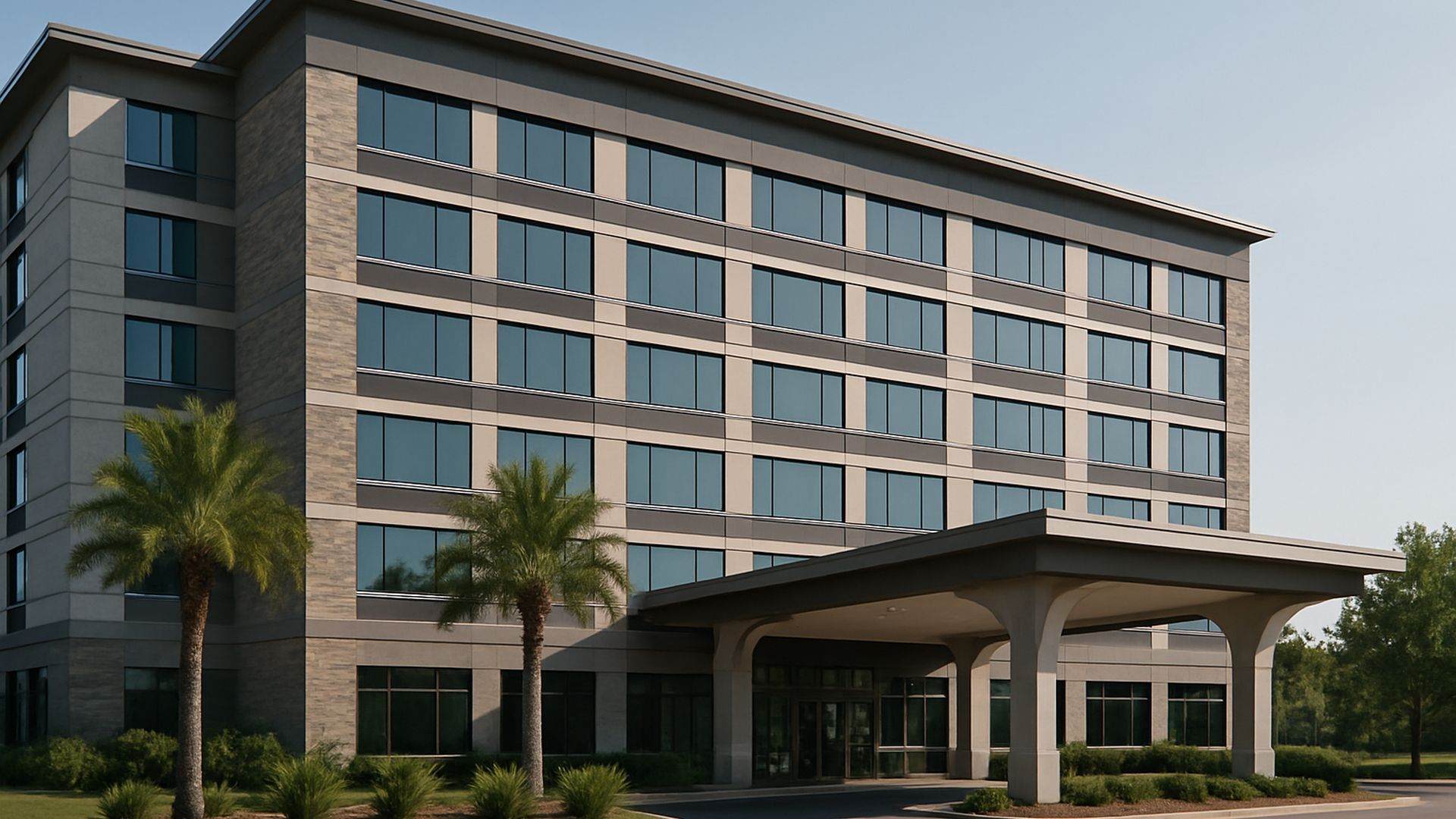
Cost Segregation for Hospitality Properties
Hotels are the FF&E-heaviest commercial property type. Guest-room furnishings, hospitality-specific MEP, food-and-beverage equipment, amenity build-out, and the operational systems that run the property all classify into accelerated buckets. The 5-year personal property bucket in a typical hotel clears 22–28% on its own. Across select-service, full-service, upscale, and luxury formats, the accelerated reclass ratio runs 26–34% depending on the FF&E density and the amenity package.
Note: Industry-benchmark grounding. Hospitality is not currently modeled as a standalone property type in the Cost Seg Smart engine. The figures below reflect published industry benchmarks and the IRS Cost Segregation Audit Techniques Guide. The Cost Seg Smart engineering team produces hospitality studies using the commercial methodology with hotel-specific component weighting; engineering numbers per property are produced at study time.
Reclass benchmark for hospitality
Industry-source reclass benchmarks across hotel formats:
| Hotel format | Typical accelerated reclass | Source |
|---|---|---|
| Select-service / limited-service | 26–30% | IRS ATG Chapter 7.3 (Hotels) |
| Full-service business hotel | 28–32% | AICPA practice aid; published study aggregations |
| Upscale / lifestyle hotel | 30–34% | AICPA practice aid; published study aggregations |
| Luxury / resort hotel | 32–38% | Published study aggregations |
The typical bucket composition for a full-service hotel:
| Bucket | Median % of basis |
|---|---|
| 5-year (Section 1245 personal property) | 22–28% |
| 7-year (Section 1245 specialty) | 1–2% |
| 15-year (Section 1250 land improvements) | 5–8% |
| 39-year (Section 1250 structural) | 64–72% |
The 5-year bucket dominates because hospitality is the most FF&E-intensive commercial property type. Many hotel components classify into 5-year personal property that would be 39-year in a comparable office building.
What gets reclassified in a hospitality property
5-year personal property (Section 1245):
- Guest-room FF&E (beds, dressers, casegoods, soft seating, lamps, art) — owned by the property
- Guest-room televisions, in-room safes, mini-bars, coffee makers
- Bathroom amenities and millwork (when removable)
- Carpet, decorative flooring throughout guest rooms and corridors
- Decorative lighting (lobby chandeliers, corridor sconces, exterior accent lighting)
- Window treatments (drapes, blackouts, sheers)
- F&B equipment (restaurant kitchen, bar equipment, banquet kitchen, room service systems)
- Spa equipment (treatment tables, hydrotherapy, sauna and steam infrastructure)
- Fitness center equipment (when owned, not leased)
- Pool equipment (pumps, filters, heaters, automated covers, slide systems)
- Audio/visual systems (ballrooms, meeting rooms, public-area background music)
- POS systems, property-management system terminals, IT infrastructure
- Specialty plumbing (food prep, ice systems, spa hydrotherapy)
- Dedicated HVAC zones (kitchen exhaust, laundry, pool)
7-year specialty (Section 1245):
- Built-in casework (front desk, back-of-house workstations, lobby millwork)
- Specialty fixtures specific to hotel operation
15-year land improvements (Section 1250):
- Parking (surface lots; structured parking integral to building is 39-year)
- Porte-cochère canopy (when not structurally integral to building)
- Pool deck, pool surrounds
- Outdoor amenity infrastructure (cabanas, outdoor F&B platforms when not permanent)
- Site lighting, monument signs, branded signage
- Landscaping, irrigation
- Sidewalks, ADA paths
39-year structural (Section 1250):
- Building shell, structural steel/concrete, roof, foundation
- Base building HVAC (central plants, base air-handling)
- Structural plumbing service entrance
- Permanent guest-room partitions (between rooms)
- Elevators (always 39-year)
- Permanent fire suppression infrastructure
- Pool shell, pool tile
Engineered analyses of hospitality properties
Three representative scenarios, with figures reflecting industry-source typical reclass percentages applied to representative basis levels:
- Small scope — select-service hotel, Phoenix AZ — 35-key select-service, $4.2M acquisition. Typical year-1 federal savings range: $370K–$450K.
- Mid scope — full-service hotel, Miami FL — 110-key full-service, $14M acquisition. Typical year-1 federal savings range: $1.3M–$1.6M.
- Large scope — convention hotel, New York NY — 280-key convention-adjacent, $58M acquisition. Typical year-1 federal savings range: $5.4M–$6.6M.
All three reflect industry-benchmark ranges. The Cost Seg Smart engineering team produces a hotel-specific engineered analysis at study time; per-property numbers will differ from the typical-range estimates.
Audit considerations for hospitality
The IRS Cost Segregation Audit Techniques Guide includes Chapter 7.3 specifically for hotels and motels. Key examination focus areas:
-
FF&E ownership: Guest-room FF&E owned by the property is 5-year depreciation. FF&E owned by the operator under a management agreement (where the operator captures the deduction) is not in the property’s basis. The audit will examine the management agreement and FF&E reserve documentation.
-
Brand-mandated components: Hotels operating under a franchise or management brand are often required to include brand-specific FF&E. These components are still 5-year regardless of the brand requirement — the source of the requirement doesn’t change MACRS classification.
-
F&B kitchen vs hotel kitchen: A standalone restaurant within a hotel may have a separately operating tenant; their FF&E is theirs, not the property’s. The hotel’s banquet kitchen and room-service kitchen are property FF&E. The audit will trace ownership.
-
Pool classification: Pool equipment is 5-year. Pool deck is 15-year. Pool shell is 39-year. The component schedule must distinguish.
-
Porte-cochère: A drop-off canopy structurally integral to the building is 39-year. A freestanding canopy on independent columns is 15-year. The structural engineering documents resolve which is which.
-
Renovation and PIP (property improvement plan) expenditures: When a hotel undertakes a brand-mandated renovation, the new components are inventoried in a follow-on cost segregation study. The renovation reclassifies the new buckets without affecting the original study’s classifications.
How a hospitality study is conducted
The engineered methodology applies six steps tailored to hospitality:
- Property scoping: format (select-service / full-service / upscale / luxury / resort), key count, F&B operations, amenity package, year built
- Land valuation: county assessor record where reliable; statistical metro/state ratios otherwise — urban hotels often have high land share
- Component inventory: guest-room FF&E inventory (or sampling for large key counts), back-of-house, F&B, amenities, public spaces, exterior site
- Cost allocation: RSMeans 2024 + PPI time index, with hospitality-specific component weighting
- Classification: each component to its MACRS bucket under Section 168
- Reconciliation: total reconciles to depreciable basis to the penny
FAQ
How much does a hospitality cost segregation study cost?
Hotel studies typically range $3,500–$25,000. A small select-service property sits at the low end; a 300+ key full-service or convention hotel at the upper end. Larger key counts increase the inventory effort.
Does cost segregation work for a hotel under a management agreement?
Yes — the property owner captures depreciation on the property and the FF&E owned by the property. FF&E owned by the operator under a management agreement is the operator’s depreciation, not the owner’s. The management agreement defines the split.
What about a hotel franchise?
A franchised hotel where the property owner owns the FF&E (the more common structure) captures the full depreciation benefit. The franchise relationship is a licensing matter and doesn’t change MACRS classification.
Does cost segregation make sense for a small select-service hotel?
At the $4.2M basis level of the small-scope analysis, the typical reclass produces $1.0M–$1.2M of accelerated bucket components, generating $370K–$450K in year-1 federal savings at a 37% bracket. After a $5,000–$8,000 study fee, year-1 ROI is 50–80×.
What if I’m doing a PIP renovation?
A pre-PIP and post-PIP cost segregation pair captures the maximum benefit. The pre-PIP study locks in the acquired-property classifications; the post-PIP study picks up the new components. The two coordinate so depreciation flows correctly. Most PIP renovations are heavily reclassifiable because the work is concentrated in FF&E and decorative finishes.
How does cost segregation interact with hotel REIT structures?
REITs can perform cost segregation on hotels held in TRS (taxable REIT subsidiary) structures. The accelerated depreciation reduces the TRS’s taxable income, which improves the overall economics. The technical interaction with the REIT distribution requirements is what the REIT’s tax counsel reviews.
What about resorts and casinos?
Resort hotels reclassify in the higher end of the range (32–38%) because of the amenity density (multiple F&B outlets, spa, pool complexes, recreation facilities). Casino properties have additional categories (gaming equipment, surveillance systems) that further increase the accelerated buckets, often into the high 30s.
Does cost segregation work for vacation rental / extended stay?
Yes — extended-stay hotels are typically branded select-service or upscale-select formats. The cost segregation methodology is the same as select-service. Furnished units may have additional FF&E depth that increases the 5-year bucket.
Get an engineered analysis of your hospitality property
Cost Seg Smart’s hospitality analyses cover select-service through luxury and resort formats. Schedule a 15-minute scoping call to discuss your property.