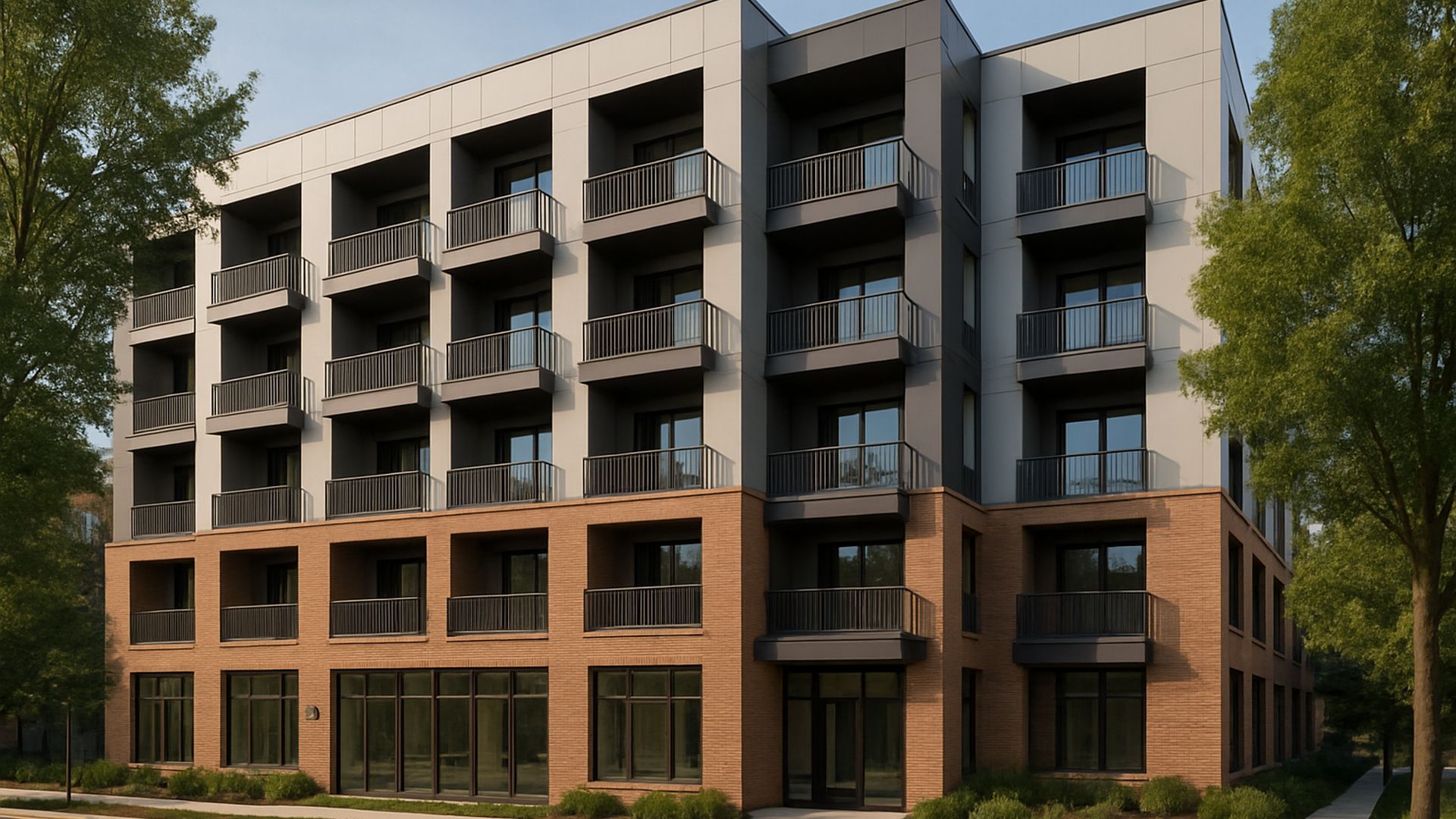
Cost Segregation for Multifamily Properties (5+ Units)
Multifamily reclassifies in the high teens — less than commercial property types because residential MEP density is lower and the structural component is larger relative to interior finishes. The depreciation schedule for residential rental property is 27.5 years (not 39), which already provides a faster baseline than commercial. The cost-seg benefit comes from pulling components into the 5/7/15-year buckets that would otherwise sit at 27.5 years. The Cost Seg Smart engine applies multifamily-specific structural efficiency and shared-system discounts so the reclass result reflects how MF buildings actually compose.
Reclass benchmark for multifamily
Across the Cost Seg Smart engineered analysis dataset, multifamily properties (5+ units) reclassify a median of 18.1% of the depreciable basis into accelerated buckets. The IQR across 41 multifamily analyses is 16–20%.
| Bucket | Median % of basis |
|---|---|
| 5-year (Section 1245 personal property) | 10.8% |
| 7-year (Section 1245 specialty) | 0.0% |
| 15-year (Section 1250 land improvements) | 7.4% |
| 27.5-year (Section 1250 residential rental) | 81.8% |
Multifamily is the one property type where the long-term bucket is 27.5-year rather than 39-year. This is the Section 168(e)(2)(A) treatment for residential rental property: 80% or more of gross rents must come from dwelling units. Buildings that fail this test (mixed-use with under 80% residential) follow the commercial 39-year schedule.
What gets reclassified in a multifamily property
5-year personal property (Section 1245):
- Carpet and resilient flooring in apartment interiors
- Cabinetry and millwork (when removable; standard apartment cabinets typically qualify)
- Appliances (refrigerators, ranges, dishwashers — when owned by the landlord)
- Window treatments
- Decorative lighting in apartments (pendants, accent)
- Decorative finishes in common areas (clubhouse, lobby)
- Pool equipment (filters, pumps, heaters) — pool deck is 15-year
- Fitness equipment in common-area gym (when owned)
- Smart-home / IoT systems (smart locks, thermostats)
7-year specialty (Section 1245):
- Generally minimal in multifamily — most FF&E sits at 5-year
15-year land improvements (Section 1250):
- Parking lots, carports, garages (surface or detached)
- Pool deck, pool surrounds (the pool shell is structural)
- Site lighting, monument signs
- Landscaping, irrigation, mulch beds
- Sidewalks, ADA paths
- Fencing, gates, perimeter security
- Playground equipment (when site-installed)
- Outdoor amenity infrastructure (BBQ pavilions, dog parks)
27.5-year residential rental (Section 1250):
- Building shell, foundation, roof
- Base building HVAC (unit-level HVAC may be 5-year if removable)
- Structural plumbing and electrical service
- Permanent partition walls between units
- Elevators
- Fire suppression infrastructure
The 5-year and 15-year accelerated buckets are where the cost-seg benefit lives. Pulling carpet, appliances, decorative lighting, and exterior site improvements out of the 27.5-year bucket and into the 5-year bucket accelerates depreciation by 22.5 years for those components.
Engineered analyses of multifamily properties
Three representative analyses from the Cost Seg Smart engine:
- Small scope — 12-unit garden, Charlotte NC — 14,400 SF, $2.3M acquisition. Year-1 federal savings at 37%: $127,060.
- Mid scope — 56-unit three-story, Atlanta GA — 56,000 SF, $11M acquisition. Year-1 federal savings: $572,468.
- Large scope — 240-unit podium, Austin TX — 240,000 SF, $58M acquisition. Year-1 federal savings: $2,748,144.
All three assume 100% bonus depreciation (OBBBA 2025), top federal bracket, and accelerated buckets taken fully in year 1.
Audit considerations for multifamily
The IRS examines multifamily studies on these axes:
-
Residential vs commercial classification: The 80% gross-rents-from-dwelling-units test under Section 168(e)(2)(A) determines whether the property depreciates at 27.5 or 39 years. The audit will examine rent rolls to verify.
-
Appliance ownership: Appliances owned by the landlord are part of the depreciable basis and depreciate at 5 years. Appliances owned by tenants are not in the basis at all. The audit will verify ownership via lease documents.
-
Pool and amenity classification: The pool shell and tile are structural (27.5-year). The pool equipment (pumps, filters, heaters, automated covers) is 5-year. The pool deck is 15-year land improvement. The component schedule must distinguish.
-
Carport and garage classification: Detached carports and garages are 15-year. Attached garages structurally connected to the building follow the building’s 27.5-year class. Detached structures with independent foundations are separately treated.
-
Cabinet permanence test: Standard apartment cabinets typically qualify as 5-year personal property under the permanence test (Section 1.48-1(c)). Custom built-in casework structural to a permanent partition does not. The engineering schedule must defend the classification.
How a multifamily study is conducted
The engineered methodology applies six steps tailored to multifamily:
- Property scoping: unit count, year built, era profile, building style (garden / mid-rise / high-rise / podium), amenity package
- Land valuation: county assessor record where reliable; statistical metro/state ratios otherwise
- Component inventory: per-unit interior components (carpet, cabinets, appliances, fixtures), shared building systems, common-area amenities, exterior site
- Cost allocation: RSMeans 2024 + PPI time index, with multifamily structural efficiency (0.90) and shared-system discount (0.82) applied
- Classification: each component to its MACRS bucket under Section 168, with the 27.5-year residential rental class for structural
- Reconciliation: total reconciles to depreciable basis to the penny
FAQ
How much does a multifamily cost segregation study cost?
Multifamily studies typically range $2,500–$15,000 depending on unit count and basis. A 12-unit garden property sits at the low end; a 200+ unit podium development at the upper end.
Does cost segregation work for a small multifamily property?
Yes. At $2.3M basis for a 12-unit garden property (the small-scope analysis above), the engineered study identifies $343,406 in accelerated buckets, producing $127,060 in year-1 federal savings at a 37% bracket. After a $2,500 study fee, year-1 ROI is 50×.
What about a duplex, triplex, or fourplex?
Properties with 4 or fewer units are typically handled under residential cost segregation methodology — distinct from the 5+ unit multifamily covered here. The reclass dynamics are similar but the engineering weighting differs. Cost Seg Smart’s residential analyses cover 1–4 unit properties.
Does cost segregation work for affordable / LIHTC multifamily?
Yes. The Low-Income Housing Tax Credit doesn’t preclude cost segregation. The accelerated depreciation works alongside the credit and reduces the property’s tax basis the same way. The technical interaction with the credit (which uses eligible basis) is what the CPA reviews; the engineering methodology is unchanged.
What if I’m building a new multifamily development?
A pre-construction cost segregation review identifies optimal classification of planned components so the construction accounting maps directly to the depreciation schedule. Particularly valuable for podium developments where structured parking and ground-floor amenities create complex classification questions.
How does cost segregation interact with passive activity loss rules for multifamily?
For passive investors, accelerated depreciation creates a passive loss that offsets passive income (rents from this and other properties). Real estate professionals (REP status under Section 469(c)(7)) can use the loss against active income. Many multifamily investors structure to qualify as a REP for this reason.
What about 1031 exchanges into and out of multifamily?
Multifamily-to-multifamily 1031 exchanges work normally with cost segregation; the accelerated depreciation carries into basis calculation of the replacement property. Exchanges between residential and commercial classes (e.g., multifamily to office) face additional considerations because the depreciation classes differ.
How does the engineering approach differ from a quick desktop study?
A quick desktop study applies industry-standard percentages without engineering. The Cost Seg Smart engine applies multifamily-specific structural efficiency factors (0.90) and shared-system discounts (0.82) that reflect how MF buildings actually compose — small reductions from one-off commercial templates that produce more defensible numbers.
Get an engineered analysis of your multifamily property
Cost Seg Smart’s multifamily analyses cover garden, mid-rise, high-rise, and podium-style developments from 5 units through large institutional portfolios. Schedule a 15-minute scoping call to discuss your property.