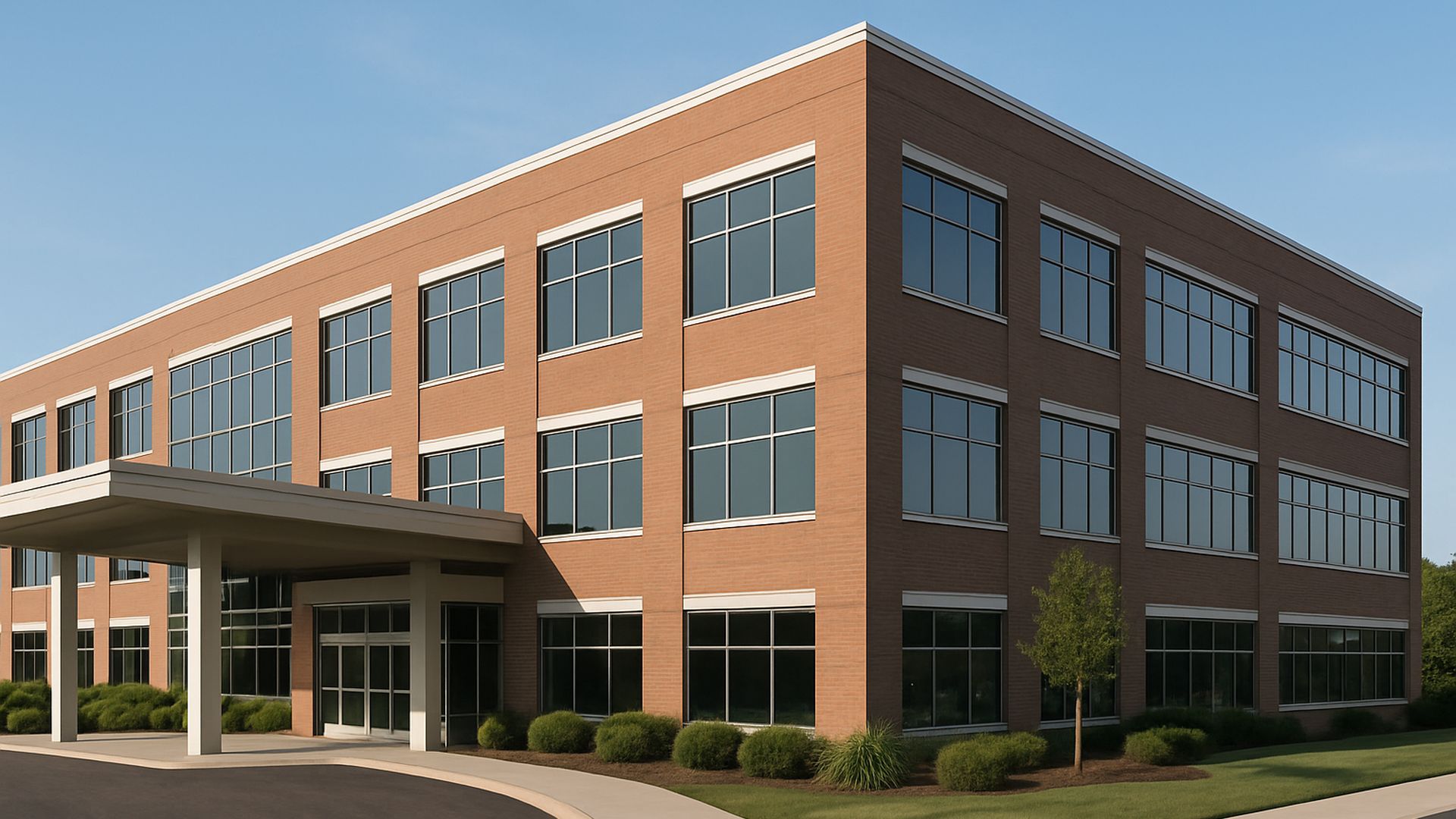
Cost Segregation for Medical Office Properties
Medical office produces the highest accelerated reclassification ratio across commercial property types. Specialty plumbing (medical gas lines, hand-wash stations, vacuum systems), specialty fixtures (exam-room casework, dental chairs, imaging mounts), dedicated electrical for diagnostic equipment, and tenant-build interiors all classify into accelerated buckets. The 5-year bucket alone consistently clears 21% of basis. Across general medical office, specialty practice buildings, surgery centers, and hospital outpatient departments, the median reclass is in the low-30s.
Reclass benchmark for medical office
Across the Cost Seg Smart engineered analysis dataset, medical office properties reclassify a median of 31.8% of the depreciable basis into accelerated buckets. The IQR across 28 medical office analyses is 30–35%.
| Bucket | Median % of basis |
|---|---|
| 5-year (Section 1245 personal property) | 22.1% |
| 7-year (Section 1245 specialty) | 1.2% |
| 15-year (Section 1250 land improvements) | 8.5% |
| 39-year (Section 1250 structural) | 68.2% |
The 5-year bucket is consistently larger than general office because of the density of specialty MEP and fit-out components.
What gets reclassified in a medical office property
5-year personal property (Section 1245):
- Exam-room casework and built-in cabinetry (clinical workstations, supply storage)
- Medical gas piping (oxygen, vacuum, nitrous, medical air) and outlets
- Specialty plumbing (hand-wash stations, eye-wash, scrub sinks)
- Imaging equipment mounts, dental chair plumbing, dialysis water systems
- Dedicated electrical for diagnostic equipment (MRI, CT, X-ray installations require dedicated circuits)
- Specialty HVAC (HEPA filtration, negative-pressure isolation rooms, dedicated zones)
- Decorative interior partitions, wall coverings
- Specialty flooring (sheet vinyl with welded seams, antimicrobial finishes)
- Lighting (procedural lighting, exam lights, surgical lighting)
- Audio/visual, security, intercom, nurse-call systems
- Lead-lined doors and shielding (in radiology suites)
7-year specialty (Section 1245):
- Built-in reception desks, nurse stations
- Custom cabinetry specific to medical workflow
15-year land improvements (Section 1250):
- Parking lots
- Covered drop-off canopies (porte-cochères) when not structurally integral
- Site lighting, monument signs (for branded practices), landscaping
- ADA access ramps, sidewalks, curb cuts
- Emergency generator pad and exterior fuel storage (when site-mounted)
39-year structural (Section 1250):
- Building shell, roof, foundation
- Base building HVAC (rooftop equipment serving the whole building)
- Structural plumbing service entrance
- Permanent interior partitions structural to the building
- Elevators, escalators
- Fire suppression infrastructure
A surgery center’s component mix differs materially from a primary-care office, which differs from a dental practice. The engineered analysis assigns weights based on the specific specialty.
Engineered analyses of medical office properties
Three representative analyses from the Cost Seg Smart engine:
- Small scope — specialty practice office, Charlotte NC — 10,000 SF, $2.4M acquisition. Year-1 federal savings at 37%: $233,768.
- Mid scope — multi-specialty medical office, Miami FL — 35,000 SF, $9M acquisition. Year-1 federal savings: $721,237.
- Large scope — hospital outpatient department, Los Angeles CA — 120,000 SF, $44M acquisition. Year-1 federal savings: $3,300,354.
All three assume 100% bonus depreciation (OBBBA 2025), top federal bracket, and accelerated buckets taken fully in year 1.
Audit considerations for medical office
The IRS examines medical office studies on specialty-specific axes:
-
Medical gas piping: Medical gas distribution lines (oxygen, vacuum, medical air) qualify as 5-year personal property when they serve the medical operation. The gas service entrance and meter are 39-year. The piping diagram resolves the split.
-
HVAC for clinical spaces: HEPA filtration, negative-pressure isolation rooms, and dedicated specialty-zone HVAC qualify as 5-year. Base building HVAC serving the lobby and common areas is 39-year. Engineering documentation must trace duct runs.
-
Lead shielding in radiology: Lead-lined gypsum, lead doors, and lead window glazing in imaging suites qualify as 5-year personal property serving the medical equipment. The supporting wall structure is 39-year.
-
Specialty electrical: Dedicated circuits for diagnostic equipment (MRI quench piping, CT power requirements) qualify as 5-year. General receptacle wiring on the floor is 39-year. The electrical schedule resolves the split.
-
Fixed vs movable casework: Exam-room casework that’s screwed into the wall but removable without structural damage qualifies as 5-year. Built-in casework structural to a permanent partition does not. The permanence test under Treasury Regulation 1.48-1(c) applies.
How a medical office study is conducted
The engineered methodology applies six steps tailored to medical office:
- Property scoping: specialty mix (primary care / specialty / surgery / imaging / dental / dialysis), year built, era profile
- Land valuation: county assessor record where reliable; statistical metro/state ratios otherwise
- Component inventory: specialty MEP, clinical buildout, exam-room components, exterior site
- Cost allocation: RSMeans 2024 + PPI time index applied per component
- Classification: each component to its MACRS bucket under Section 168
- Reconciliation: total reconciles to depreciable basis to the penny
FAQ
How much does a medical office cost segregation study cost?
Medical office studies typically range $2,500–$15,000. A small specialty practice sits at the low end; a hospital outpatient department or surgery center with extensive specialty MEP at the upper end.
Does cost segregation work for a medical practice that owns its building?
Yes — the practice or its real estate entity captures the depreciation. Many physicians own their practice’s building through a separate LLC; the LLC is the cost-seg taxpayer.
What about leased medical office where the practice paid for the buildout?
Tenant improvements paid by the tenant generally depreciate over the lease term (or 39 years, whichever is shorter, subject to Section 168(f)). Cost segregation can still identify and classify those TIs into accelerated buckets when the tenant owns them.
Can I do cost segregation on a dental practice?
Yes. Dental practices typically reclassify in the high-30s percent because of the density of specialty plumbing (treatment chairs, vacuum systems, hand-wash stations) and specialty electrical.
Does cost segregation work for a surgery center?
Yes — surgery centers are among the highest-reclass property types because of specialty HVAC (operating room positive-pressure, isolation, anesthesia gas evacuation), specialty plumbing, specialty electrical, and lead shielding. Reclass percentages in the mid-30s are common.
What if I’m buying a medical office building I plan to renovate?
A pre-renovation study establishes the acquired-property classification; a post-renovation study captures the new components. The two coordinate so depreciation flows correctly.
Does cost segregation make sense for a small medical practice building?
At $2.4M basis (the small-scope analysis above), the engineered study identifies $631,805 in accelerated buckets, producing $233,768 in year-1 federal savings at a 37% bracket. After a $3,000 study fee, year-1 ROI is 75×.
How does medical office cost segregation interact with passive activity loss rules?
For passive investors, accelerated depreciation creates a passive loss that offsets passive income. Real estate professionals (REP status under Section 469(c)(7)) can use the loss against active income — including the active income from the medical practice if the physician also qualifies as a REP and groups the rental activity appropriately.
Get an engineered analysis of your medical office property
Cost Seg Smart’s medical office analyses cover primary care, specialty practice, surgery centers, dental, imaging, dialysis, and hospital outpatient departments. Schedule a 15-minute scoping call to discuss your property.