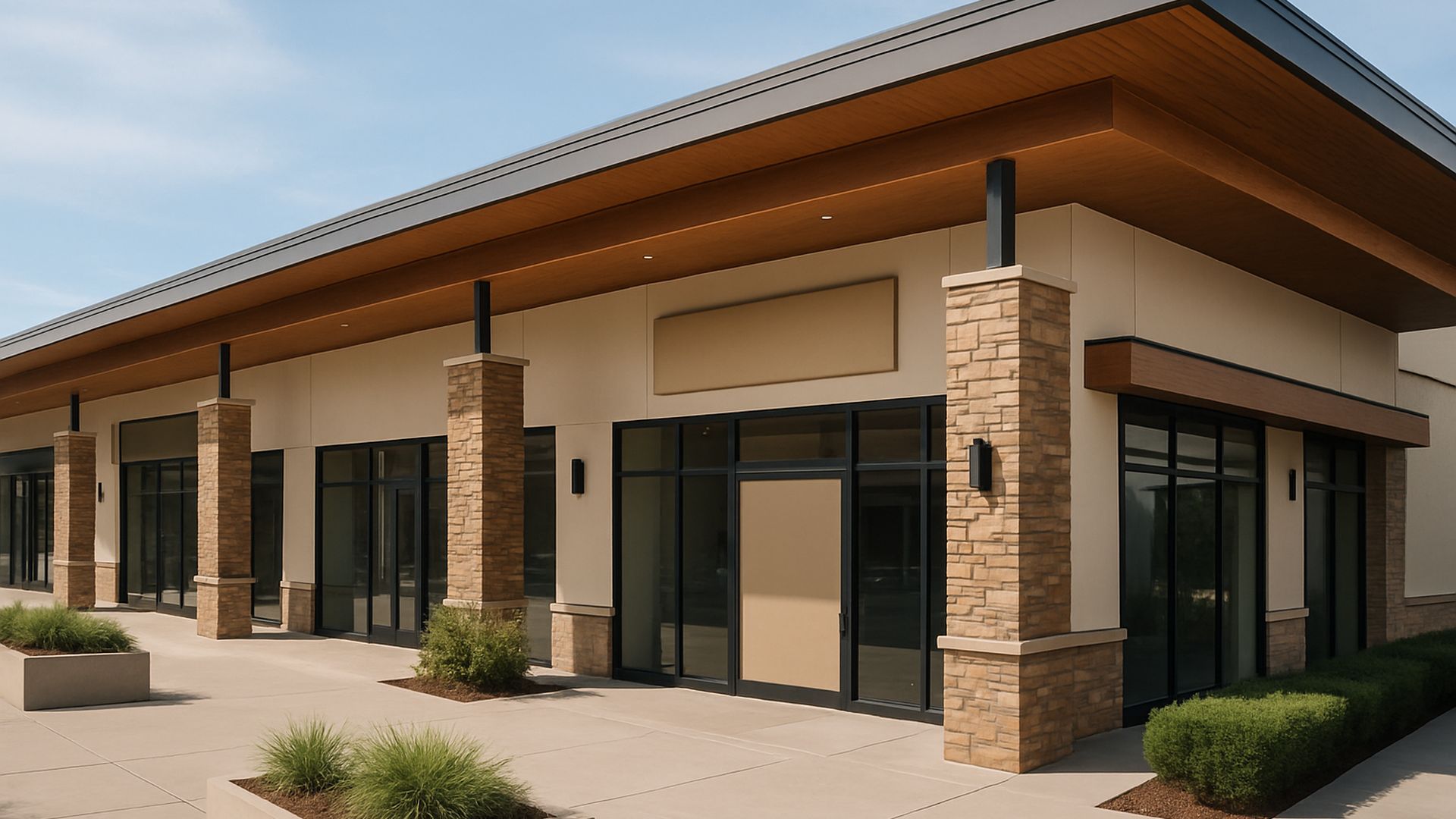
Cost Segregation for Retail Properties
Retail properties produce the second-highest accelerated reclassification ratio across the commercial property types, behind only medical office. Storefronts, decorative finishes, dedicated lighting tracks, signage, and large parking-lot improvements all classify into accelerated buckets. Strip centers, anchored neighborhood retail, and lifestyle centers each have distinct component profiles, but the median reclass is consistently in the low-30s.
Reclass benchmark for retail
Across the Cost Seg Smart engineered analysis dataset, retail properties reclassify a median of 32.3% of the depreciable basis into accelerated buckets. The IQR across 38 retail analyses is 29–34%.
| Bucket | Median % of basis |
|---|---|
| 5-year (Section 1245 personal property) | 18.4% |
| 7-year (Section 1245 specialty) | 1.2% |
| 15-year (Section 1250 land improvements) | 12.7% |
| 39-year (Section 1250 structural) | 67.7% |
The 15-year bucket is meaningfully larger than office because retail centers carry significant exterior improvements: large parking fields, monument signage, site lighting, and landscaped pad sites.
What gets reclassified in a retail property
5-year personal property (Section 1245):
- Storefront systems (movable, demountable display windows and entries)
- Decorative interior finishes (specialty wall treatments, accent ceilings)
- Track lighting and display lighting
- Sound systems, video walls, point-of-sale infrastructure
- Decorative tile and resilient flooring
- Tenant-specific HVAC and refrigeration equipment
- Cabinetry, shelving systems specific to the tenant fit-out
- Specialty plumbing for tenant operations (food prep, restroom upgrades)
7-year specialty (Section 1245):
- Built-in casework and specialty fixtures (limited categories)
15-year land improvements (Section 1250):
- Parking lots — typically the largest single 15-year line item in retail
- Pylon signage and monument signs
- Site lighting (parking lot poles, fixtures)
- Landscaping (anchor pad sites, perimeter, median islands)
- Sidewalks, curb cuts, ADA ramps
- Storm drainage, retention basins
- Fencing, screening walls, retaining walls
39-year structural (Section 1250):
- Building shell, roof, foundation
- Base building utilities (main electrical service, water main, sanitary sewer)
- Permanent structural partitions
- Fire suppression infrastructure
- Permanent ceiling structure (suspended grids may classify accelerated depending on application)
A neighborhood strip center reclassifies differently than an anchored grocery-centered center, which reclassifies differently than a destination lifestyle center. The engineering analysis accounts for the specific component mix.
Engineered analyses of retail properties
Three representative analyses from the Cost Seg Smart engine:
- Small scope — neighborhood strip center, Austin TX — 6,000 SF, $1.2M acquisition. Year-1 federal savings at 37%: $112,485.
- Mid scope — anchored retail center, Coral Springs FL — 28,000 SF, $6.2M acquisition. Year-1 federal savings: $577,214.
- Large scope — lifestyle center, Los Angeles CA — 95,000 SF, $24M acquisition. Year-1 federal savings: $1,713,684.
All three assume 100% bonus depreciation (OBBBA 2025), top federal bracket, and accelerated buckets taken fully in year 1.
Audit considerations for retail
Retail studies face IRS examination on several specific axes:
-
Storefront classification: Storefront entries and display windows that can be removed without damage qualify as 5-year. Permanent curtain walls that are structural do not. The engineering documentation must distinguish.
-
Tenant improvements vs landlord improvements: A landlord that pays for tenant improvements (TIs) reclassifies them as personal property when they meet the permanence test. A TI allowance paid in cash to the tenant does not generate landlord depreciation — the tenant captures it.
-
Lighting: Decorative and display lighting (track lights, accent fixtures) qualifies as 5-year. Recessed building-shell lighting that’s part of the base electrical service is 39-year. The audit will examine the lighting plan.
-
Parking lot allocation: The full parking lot, including subbase, asphalt, striping, and curbs, is a 15-year land improvement. The audit will verify the cost allocation against site work line items in the original construction or acquisition cost.
-
Anchor lease premiums: When a retail acquisition price reflects an in-place anchor lease above market, the premium is not in the depreciable basis — it’s intangible. The land/improvement split must be defended against this.
How a retail study is conducted
The engineered methodology applies six steps tailored to retail:
- Property scoping: gross leasable area, anchor mix, year built, era profile
- Land valuation: county assessor record where reliable; statistical metro/state ratios where not
- Component inventory: storefront systems, interior buildout, exterior site work, signage, parking, landscaping
- Cost allocation: RSMeans 2024 + PPI time index applied per component, with retail-specific component weighting
- Classification: each component assigned to its MACRS bucket under Section 168 and supporting regs
- Reconciliation: total reconciles to depreciable basis to the penny
FAQ
How much does a retail cost segregation study cost?
Retail studies typically range $2,500–$10,000. Single-tenant retail at sub-$2M basis sits at the low end; large anchored centers and lifestyle centers at the upper end.
Does cost segregation work for triple-net (NNN) retail?
Yes. Even when the tenant pays building expenses, the landlord owns the building and captures depreciation. A NNN retail owner is often a high-priority cost-seg candidate because the income is stable and the depreciation deduction directly offsets it.
What if I bought the retail property in a prior year?
Section 481(a) catch-up depreciation lets you take all previously-missed accelerated depreciation in the year the study is completed. No amended returns required. Form 3115 is filed with the IRS.
Do I need to do a study for each tenant separately?
No. The engineered analysis covers the whole property at once. Tenant-specific fit-outs are inventoried as part of the component schedule, but they’re not separate studies.
How does cost segregation interact with passive activity loss rules?
For passive investors, accelerated depreciation creates a passive loss that offsets passive income. Real estate professionals (REP status under Section 469(c)(7)) can use the loss against active income. The strategy mechanics don’t change; the use of the resulting deduction does.
What about pad sites and outparcels?
Pad sites and outparcels are typically included in the same study when owned together. Each is inventoried for its specific component mix (e.g., a freestanding QSR outparcel will have a different reclass % than the adjacent in-line retail).
Does cost segregation make sense for a small strip center?
At the $1.2M basis level in the small-scope analysis above, the engineered study identifies $304,014 in accelerated buckets, producing $112,485 in year-1 federal savings at a 37% bracket. After a $2,500–$3,500 study fee, year-1 ROI clears 30×.
What if my retail property is a ground lease?
A ground lessee that owns the building (but leases the land) captures all the building-related depreciation. The land is excluded from the depreciable basis regardless.
Get an engineered analysis of your retail property
Cost Seg Smart produces engineered retail cost segregation analyses for properties from single-tenant pad sites through lifestyle centers. Schedule a 15-minute scoping call to discuss your specific property.