Overview
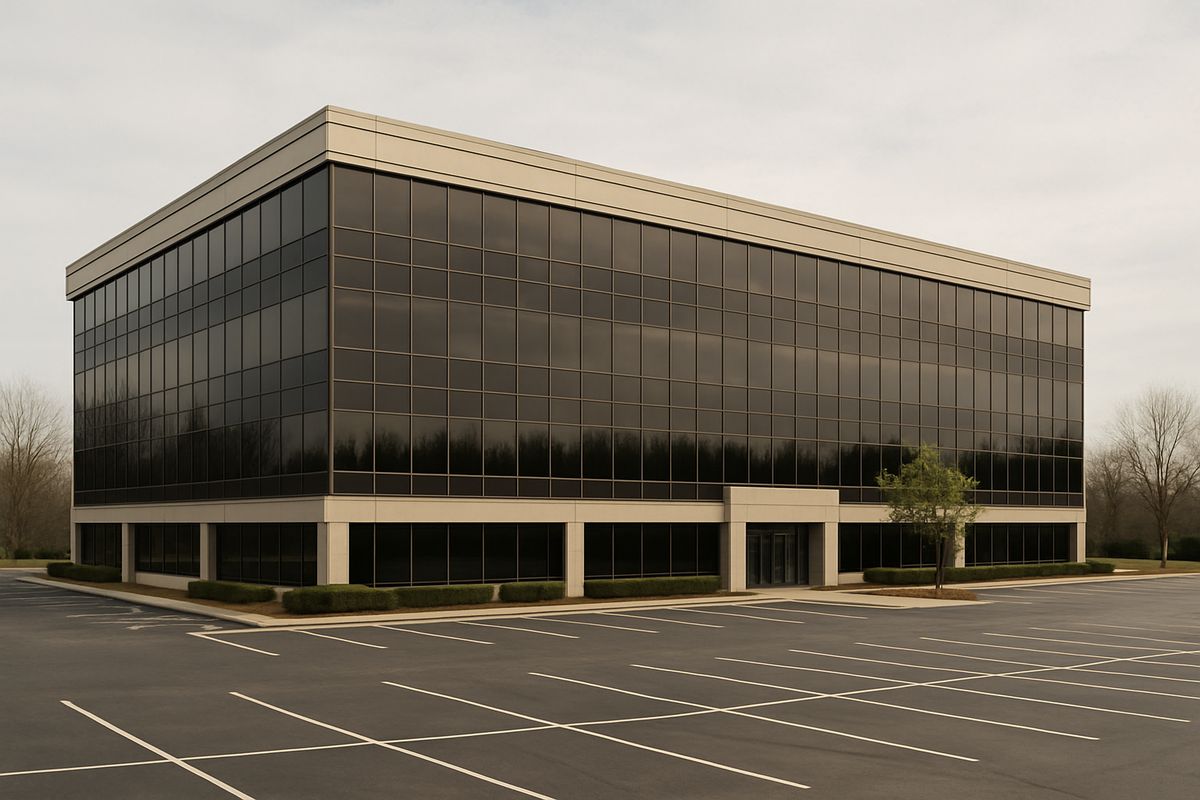
A 4-story Class B suburban office building in Phoenix. Multi-tenant general office occupancy, mid-2000s construction with subsequent tenant turnover refreshes. Acquired for $5,500,000 in 2024.
The Cost Seg Smart engineered analysis identifies $1,259,581 in accelerated bucket components (26.8% of the $4,697,000 depreciable basis after a 14.6% land valuation).
What the analysis identifies
The 32,000 SF property carries the component density typical for a Class B suburban office. The component inventory pulls the following share into accelerated buckets:
- tenant-finish carpet, decorative partitions, and dedicated tenant HVAC zones
- specialty lighting in tenant suites and decorative lighting in lobby and common areas
- the parking lot (the largest single 15-year line), site lighting, monument signage, and exterior landscaping
- dedicated electrical for tenant suites (data raceways, dedicated circuits beyond base building service)
Item-level engineering documentation supports each classification — photographs of mounting details, mechanical schematics for HVAC and plumbing classifications, electrical schedules for dedicated-circuit identification.
Reclass breakdown
| Bucket | Amount | % of basis | MACRS section |
|---|---|---|---|
| 5-year personal property | $720,402 | 15.3% | Section 168(e)(3)(B); Section 1245 |
| 7-year specialty | $55,933 | 1.2% | Section 168(e)(3)(C); Section 1245 |
| 15-year land improvements | $483,246 | 10.3% | Section 168(e)(3)(E); Section 1250 |
| 39-year structural | $3,437,419 | 73.2% | Section 168(c); Section 1250 |
| Total depreciable basis | $4,697,000 | 100% |
Land value (excluded from depreciable basis): $803,000 (14.6% land allocation, Phoenix AZ market).
Year-1 federal tax savings
Assuming 100% bonus depreciation per the One Big Beautiful Bill Act (OBBBA, 2025), the full accelerated bucket components are deductible in year 1:
- Accelerated bucket total: $1,259,581
- Federal tax savings at 37% top bracket: $466,045
For a passive investor, the deduction creates a passive loss offsetting passive income. For a taxpayer qualifying as a real estate professional under Section 469(c)(7), the deduction offsets active income — including business operating income from non-real-estate sources.
Methodology applied
The engine applied the following parameters:
- Era profile: 2002 build, finish density and component weights calibrated to construction-era patterns
- Geo factor: 0.88 (Phoenix MSA, metro calibrated)
- Component count: 45 distinct line items in the inventory
- Indirect cost multiplier: 1.25 (standard 25% indirect uplift covering soft costs, contingency)
- PPI multiplier: 1.04 (BLS construction cost index applied from build year to acquisition year)
- QC status: PASS (engineered analysis cleared all 16 quality-control checks)
The land valuation used the statistical source. Properties where the county assessor record is within reliability tolerances may produce a different land allocation; the engineered methodology applies the most defensible source available.
Audit considerations specific to this property
-
Tenant-specific vs base building HVAC: The 5-year bucket includes dedicated tenant-zone HVAC. The engineering documentation traces duct runs and circuit schedules to establish that the equipment serves a specific tenant rather than the whole building.
-
Decorative vs structural partitions: Interior partitions classified as 5-year personal property must pass the Section 1.48-1(c) permanence test — removable without damage to the structural envelope. Photographs of mounting details support the classification.
-
Parking lot allocation: The 15-year bucket includes the full parking lot (asphalt, subbase, striping, curbs, drainage). The audit verifies the cost allocation against site work line items.
Return profile
| Metric | Value |
|---|---|
| Study cost (typical) | $4500–6500 |
| Year-1 federal tax savings (37% bracket, 100% bonus) | $466,045 |
| Year-1 ROI on study fee | 72×–104× |
| Total accelerated depreciation pulled forward | $1,259,581 |
The ROI calculation reflects gross year-1 tax savings against the typical study cost range. Net present value of the strategy depends on hold period (longer holds capture more time value) and recapture treatment at sale.
Want analysis like this for your office property?
Schedule a 15-minute scoping call to walk through a property-specific engineered analysis. Cost Seg Smart produces a 30+ page IRS-defensible report typically in 2–4 weeks from scoping.
Schedule a scoping call → — or see the office property page for the broader methodology.
Related analyses: