Overview
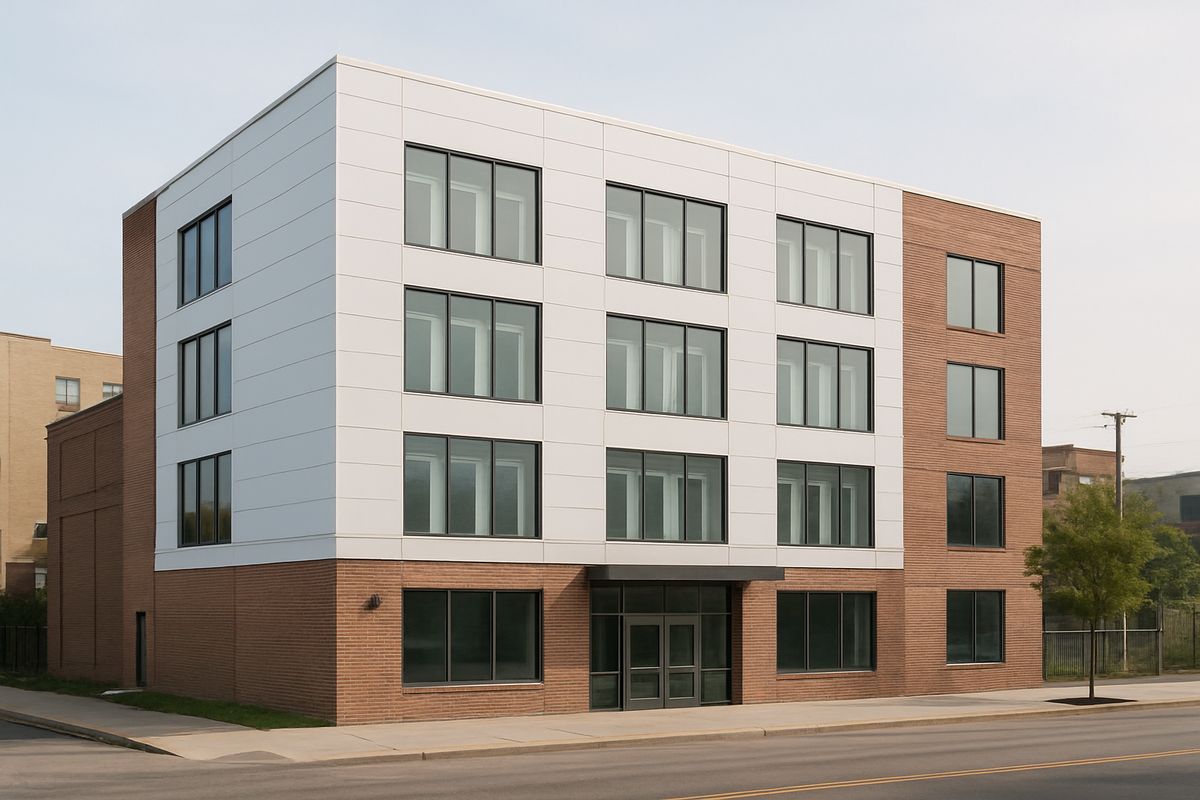
A three-story climate-controlled facility in Denver, CO. 2018 construction. Acquired for $14,000,000 in 2024.
This is an industry-benchmark analysis — self-storage is not currently modeled as a standalone property type in the Cost Seg Smart engine, so the figures below reflect typical reclassification ranges drawn from Self Storage Association reports, the IRS Cost Segregation Audit Techniques Guide, and aggregated published study data. A property-specific engineered analysis from Cost Seg Smart’s engineering team uses the commercial methodology with property-specific component weighting, producing precise numbers at study time.
What the analysis identifies
A three-story climate-controlled facility typically reclassifies in the 28–32% accelerated range. The component inventory pulls the following share into accelerated buckets:
- the drive aisle paving and customer access paving (the largest 15-year line in self-storage)
- roll-up storage unit doors (defended as 5-year personal property under the permanence test)
- security infrastructure — CCTV, electronic access control, gate operators, alarm systems
- site lighting, perimeter fencing, monument signage, RV/boat storage paving
- office buildout — small share of the property but higher 5-year density (carpet, office HVAC, IT)
Typical reclass breakdown (industry benchmark, applied to this basis)
| Bucket | Amount (typical) | % of basis | MACRS section |
|---|---|---|---|
| 5-year personal property | $1,008,000 | 9.0% | Section 168(e)(3)(B); Section 1245 |
| 7-year specialty | $168,000 | 1.5% | Section 168(e)(3)(C); Section 1245 |
| 15-year land improvements | $2,240,000 | 20.0% | Section 168(e)(3)(E); Section 1250 |
| 39-year structural | $7,784,000 | 69.5% | Section 168(c); Section 1250 |
| Total depreciable basis | $11,200,000 | 100% |
Land value (excluded from depreciable basis): $2,800,000 (20.0% typical land allocation for self-storage in Denver market).
Year-1 federal tax savings (industry-benchmark range)
Assuming 100% bonus depreciation per the One Big Beautiful Bill Act (OBBBA, 2025), and applying the typical reclass range to this basis:
- Reclass range applied: 28–32% accelerated
- Year-1 federal tax savings range at 37% top bracket: $1,160,320–$1,326,080
- Midpoint of range: $1,263,920
A property-specific engineered analysis produces a single defined number for the property’s actual reclass percentage; the range above represents the industry-typical band a property in this category falls within.
Sources
Industry-benchmark figures in this analysis draw from Self Storage Association reports, the IRS Cost Segregation Audit Techniques Guide, and aggregated published study data. The Cost Seg Smart engineering team produces property-specific analyses using these benchmarks as the starting point, then refining for the specific property’s component mix, age, geographic cost factor, and operational characteristics.
Audit considerations specific to this property
-
Roll-up door classification: The most consequential audit position in self-storage. The engineering defense: doors are removable without damage to the structural opening, serve the tenant’s use of the rented space, and meet the Section 1.48-1(c) permanence test. Photographs of mounting detail support the classification.
-
Office vs storage square-footage split: The rental office is a small portion but has higher 5-year density. The engineering documentation establishes the square-footage split and applies component weights separately.
-
Climate control HVAC: HVAC dedicated to climate-controlled units may qualify 5-year if separable from base building. HVAC serving the office and common areas is 39-year. The mechanical schedule distinguishes.
Return profile
| Metric | Value |
|---|---|
| Study cost (typical) | $8000–14000 |
| Year-1 federal tax savings (37% bracket, 100% bonus, midpoint) | $1,263,920 |
| Year-1 federal tax savings (range) | $1,160,320–$1,326,080 |
| Year-1 ROI on study fee | 90×–158× |
| Total accelerated depreciation pulled forward (midpoint) | $3,416,000 |
Want analysis like this for your self-storage property?
The figures above are industry benchmarks applied to a representative basis. A property-specific engineered analysis from Cost Seg Smart’s engineering team produces precise numbers calibrated to your property’s actual component mix, age, geographic cost factor, and operational characteristics.
Schedule a scoping call → — or see the self-storage property page for the broader methodology.
Related analyses: